Independent AI advisor · Reykjavík

AI that pays off in the business.

I'm Ragnar Agustsson, a fractional Chief AI Officer (CAIO). I help management decide where AI pays, set rules for how it is used, and build what is worth building. You own everything that gets made, and results are measured in money. I sell no software and no licences.

Where do you stand? The self-assessment is eight questions with an instant result. The first call is an hour and costs nothing. I work in English and Icelandic, on site in Reykjavík or remotely across Europe.

Icelandic companies and AI
48%use AI software
14%have an AI strategy

Statistics Iceland, March 2026. 848 companies responded.

The situation

Where most companies are

  • A licence everyone uses a little

    Copilot or ChatGPT is in, and people use it for one-off tasks. Nobody knows what it returns.

  • Pilots that never reached the accounts

    One or two trials started well and faded out. Nothing changed in the operation.

  • A board asking for a number

    The board asks what AI does for the company. The answer has to be in money.

Approach

How I work

I work inside your company, with your people. The work can be strategy and priorities with the management team, building solutions, or both. A build can be a clean-up of your data, a connection that opens your systems to AI, or an agent: a program that does a defined job on your data under rules you set.

  1. The conversation

    We start with a conversation about the business: what takes time, what costs money, and what you want AI to do for you. You do not need to know the answer in advance.

  2. Rethink the work

    AI on top of an old process makes the old process faster, with the same bottlenecks and the same steps nobody needs. So for every job I first ask: if we built this today, would we build it this way? Unnecessary steps are removed before anything is built. It is the first step of the assessment and of every new job after it.

  3. Assessment

    I go through your systems, data and work with your people and tell you plainly where AI pays and what to leave alone. The result is a clear recommendation: strategy, rules, a build, or nothing. I have run conventional IT systems for a quarter of a century and know how to get at the data in them. If you wish, I handle the contact with your system vendors and IT providers.

  4. Doing the work

    Sometimes the work is strategy, a usage policy and priorities with the management team. Sometimes it is a build: a data clean-up and a data layer you own, an MCP server that connects your systems to the AI tools your people already use, a dashboard, or agents that do defined jobs under rules you set, for example analysing revenue and costs or customer communication. I do what the job calls for.

  5. You take over

    Your people learn to use, run and build on what we make, in a weekly workshop. The solution is easy to adapt when needs change or better technology arrives. The day the engagement ends, nothing stops working.

Ownership

Software you own

The code, the keys and every environment are yours from the first day. You are tied neither to me nor to any technology vendor. Nor do I want you to trade one vendor lock-in for another: you should be able to change model, service and adviser whenever something better comes along.

  • Everything in your name

    The code repository, cloud account, database, keys, apps and audit log are opened in your name.

  • Open standards

    For example PostgreSQL and MCP. I use what suits you. Switching model or cloud is a setting and a few days' work.

  • You keep up with the technology

    When a better model or a cheaper service comes along, you switch. Every solution that uses a model has a fallback model from another maker that is tested regularly.

  • You carry on without me

    An exit test shows your people, or your IT provider, can run, change and restore everything without me. If the exit test shows any step needs me, I fix it free of charge, as the contract says.

Rules

Rules that come with every solution

AI that can do anything is a risk. When a solution gets access to your data, whether an agent or a connection, these rules apply from the first day and are written into the contract.

  • Read-only by default

    The solution sees only the data you have approved.

  • Authority is earned

    At first a person approves every write. Reversible, low-value actions earn automatic approval once the record shows it is safe. Payments, contracts and changes to customer records always need a named person's approval.

  • Your own accounts

    Keys, data and model run on accounts you own.

  • Outside text is data

    What arrives by email or from the web can never give the solution orders.

  • Every action is logged

    An audit log you keep and can show your board, your auditor or a regulator.

  • You can stop it at once

    Any solution can be stopped at once, without calling me.

Security

Cyber security, information security and data protection

I was responsible for IT and information security at a regulated financial firm and hold your work to the same standard.

  • Least privilege

    Every solution and every user gets only the access the job needs. Sign-in uses multi-factor authentication, and keys live in a secrets vault, never in the code.

  • Encryption

    Data is encrypted in transit and at rest.

  • Vulnerabilities and updates

    Code is reviewed for security before it goes into production, and dependencies are monitored and kept up to date.

  • Personal data

    You are the controller of the data. Where a solution handles personal data, we sign a data processing agreement and carry out a data protection impact assessment before it starts, under the GDPR and Icelandic Act no. 90/2018.

  • Incidents

    If something goes wrong you hear at once what happened and what was done, and I help you judge whether it must be reported to the data protection authority.

Where the data lives

Everything we build and store lives in your own systems. The model runs, for example, on Amazon Web Services inside its European geography, on your own AWS account. AWS is then the data processor and Anthropic has no access to prompts or outputs. The account is set to retain nothing, and your data is never used for training.

Measurement

Measured in money and reconciled to the books

  • Baseline

    Built from 36 months of history and set against national demand, so the season does not mislead.

  • Comparison

    Where possible the agent goes live product by product. What was not touched shows what would have happened anyway.

  • Time

    Saved time counts as money only when it saves real payroll cost.

  • Report

    One page a month, reconciled to the accounts.

First step

How we start

We start with a conversation, and I shape the engagement to your size and need. The detailed material, the shape and the price follow the first call.

  1. Start here

    First call

    One hour

    You tell me about the business and what you want AI to solve. I listen, ask, and say what I think pays to start with. It helps to take the self-assessment first.

  2. Strategy and usage policy

    Two or three meetings

    Many companies use AI without rules. With the management team we decide which tools may be used, with which data, and who is accountable. You get a one-page usage policy, a short training session for staff and a list of the jobs worth looking at first. The result is decisions people follow.

  3. Assessment

    Before anything is decided

    Where AI pays at your company and what to leave alone. A rethought process for each job, a map of your systems and data, a measure and a baseline for each job, and a clear recommendation for the next step: strategy, rules, a build, or nothing. The scope depends on the size of the company.

  4. The engagement

    Shaped to you

    A fractional CAIO who leads, builds, or both: priorities, the usage policy and the rules that come with every solution, review of vendor offers and of what your people or others build, reporting to the board, and where it fits the build itself with your people. The rhythm and the length depend on your size and need, from a bounded project at a small company to a standing cadence with the management team at a large one. All of it written into a contract with a clear end date.

Models and cloud always run on your own accounts, at cost with no margin.

Independence

Five questions to ask any advisor

Who pays you?
Only you, by the day, invoiced monthly. No commission, no referral fees and no margin from any vendor.
Are you paid to promote any product?
No. I keep up with every major vendor's technology, but none of them pays me anything.
Do you earn anything if we pick another tool or build it ourselves?
No. I am paid only for my own work, whichever route you choose.
Do you put the alternatives in writing?
Yes. Every recommendation to buy or build names the alternatives considered and why they lost.
Would you advise us to do nothing?
Yes, when that is the right answer.

My own interests

I own Sóley, a booking channel for Icelandic tourism. When a project touches travel distribution I say so first, write my advice down with the alternatives, and you can exclude my companies at any time.

I usually build on Claude from Anthropic and I say so. No vendor pays me anything, and the alternatives are always on paper.
Founder

I build my own company too

What I advise others to do, I have built and run myself first.

Sóley

Travel

An open booking network for Icelandic tourism. Travellers talk to Sóley in Claude, ChatGPT, WhatsApp or on the web. Sóley connects to operators' Bókun accounts and writes bookings straight into their calendars.

  • In the Claude Connectors Directory since August 2026
  • In ChatGPT since September 2026
  • Designed, built and run by me
soley.travel

About

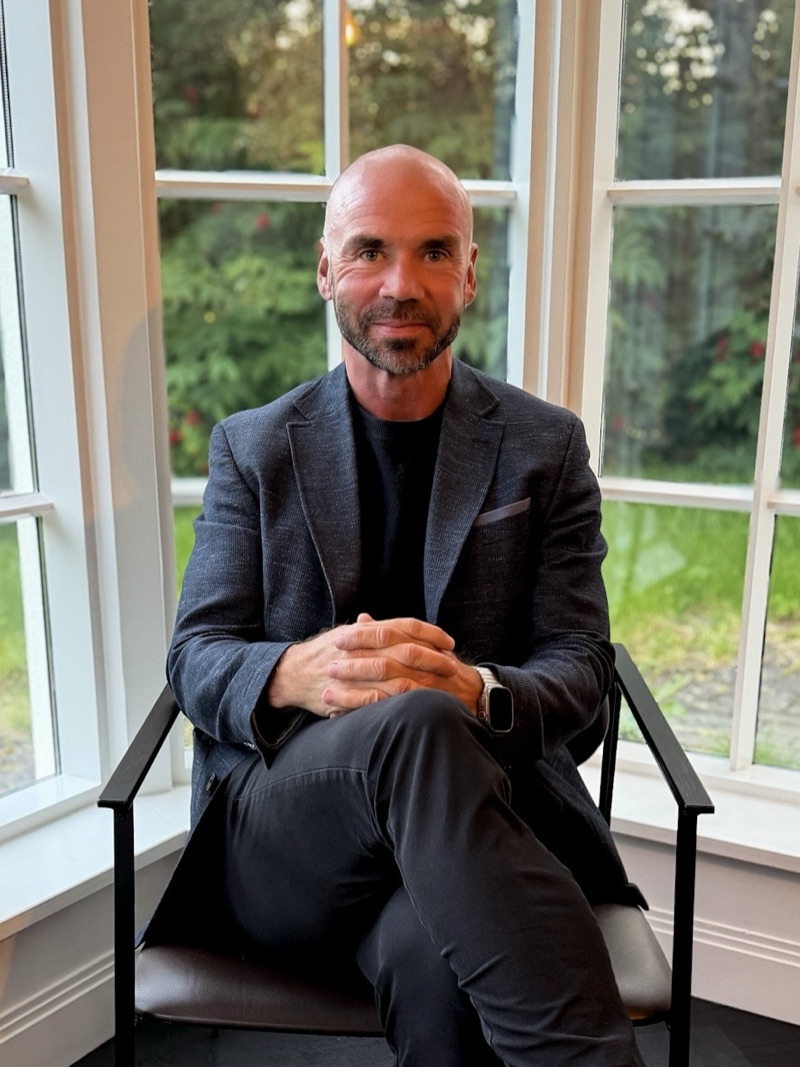
Ragnar Agustsson seated in a chair by a window

Twenty-five years in systems that can't stop

I have built and run systems for a quarter of a century, mostly in financial services, where mistakes cost money and regulators set strict demands. I spent eleven years in London, ran software development at Landsbankinn and was Head of IT at Fossar Investment Bank through a merger.

In July 2026 I started building my own companies and helping others put AI into their operations.

  1. 2026

    Cognia ehf.

    Independent AI advisor and fractional CAIO. Founder of Sóley.

  2. 2023–2026

    Fossar Investment Bank

    Head of IT.

  3. 2014–2023

    Landsbankinn

    Head of Software Development, later technical lead for Markets and Finance.

  4. 2008–2014

    Man Group and GLG Partners, London

    Ran IT for Man's Funds of Funds business. Later built the trading platform at the hedge fund GLG.

  5. 2006–2008

    HSBC and Landsbanki, London

    Built a hedge-accounting system at HSBC that is still in use. Later Head of Software Development at Landsbanki's London branch.

  6. 2000–2003

    Eskill

    Founder.

Executive MBA, University of Iceland, graduating 2027. BSc in Computer Science, Reykjavík University.

Collaboration

When a project needs more than one

I work with other independent advisers when a project calls for more than one: strategy for a board, a readiness assessment in a regulated setting, or putting operations and accountability on a firm footing. Each of us runs our own practice and answers for our own work. That gives you a wider bench without a large consultancy, and I introduce them when the project needs them.

Contact

Send me a line

Tell me about the business and what you want to change. I'll reply with a suggestion for a first call.

Send an email

Email
ragnar@cognia.is
Phone
+354 787 0886
LinkedIn
ragnaragustsson